![]() |
||
|
|
||
Frequently asked questions about Bees for Developmentscroll down for more FAQs
Who is Bees for Development?Bees for Development is an independent organisation founded in 1993. We are an information centre, research body and development partner working at the heart of an international network of people and organisations involved with apiculture in developing countries. More information.
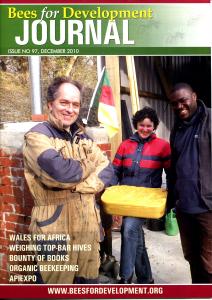
What does Bees for Development do?We provide information, educational resources and undertake research. We publish and disseminate the Bees for Development Journal. We work with partners in developing countries to implement target-specific development projects. More information.
What does Bees for Development not do?We are not a grant-giving organisation and we do not provide equipment. We do provide information about how people can make their own equipment and become self-sufficient.
How can we help you?We can provide information and resources. If you would like to receive the Bees for Development Journal let us know. For more information look at the Menu at the top and go to How we help you
How can you help us?You can help us by paying a subscription to become a Member of the Bees for Development Trust. Click here to find out how.
How can you help a beekeeper in a developing countryYou can help by sponsoring a subscription to the Bees for Development Journal, enabling them to access news, articles, reports and events. They can learn from other beekeepers around the world - many coping with the same problems. Click here to sponsor a beekeeper.
How do I submit an article for the Bees for Development Journal?We are very willing to receive articles from any member of the beekeeping community. Just follow these simple guidelines and we will happily consider your submission click here.
Frequently asked questions about beekeeping and honey
How can I tell if honey has been adulterated?It is rare for honey to be adulterated with other substances. Some people think honey which has crystals in it may be adulterated with sugar but this is not the case - crystallisation of honey is a normal process. More information about crystallisation More information about checking for adulteration
Which is the best hive type for Africa?Any hive is suitable as long as the bees like it, the beekeeper can afford it and it works. For a more complete answer please refer to the section on hive types in our Information Portal or read this article.
Some recently answered queries
I would like to start beekeeping at our school in Uganda. We would like to raise some money to support the school pupils. How can you help us? Headmaster from Uganda Answer click here
I am a young Cameroonian graduate who is highly interested in bee farming. Unemployment being the order of the day in my country, I opted for self employment by creating my bee farm. How can you help me? A beekeeper from Cameroon Answer click here
Will the work of Bees for Development cause an influx of cheap honey into the UK and make it harder for UK beekeepers to sell their honey? A beekeeper from the United Kingdom Answer click here
Question I am a Barbadian currently living in the UK. I want to set up a beekeeping business in Barbados. How can I go about this? An entrepreneur from UK / Barbados Answer click here
|
||
|
Website Designed by Wye Media
|
||